






01 Feb Smart Cities, Clean Future: Environmental Management in Urban Canada
The New Urban Imperative
Across Canada, cities are evolving from traditional urban centres into ecosystems of innovation, resilience, and sustainability. As the majority of Canadians now live in metropolitan areas, the environmental challenges of waste, pollution, and infrastructure strain have become increasingly complex — and urgent.
Enter the era of environmental management in urban planning: a strategic, data-driven approach that transforms how cities grow, operate, and sustain themselves. From cleaner air and smarter waste systems to greener infrastructure and community engagement, environmental management services are now central to Canada’s smart city vision.
Environmental Management: The Framework for Urban Sustainability
At its core, Environmental Management in a city context provides the systems, policies, and performance tools needed to monitor and reduce urban environmental impacts. Municipalities and developers increasingly rely on Environmental Management Systems (EMS), often aligned with ISO 14001 standards, to integrate sustainability into every layer of decision-making — from zoning to maintenance.
Key goals include:
- Reducing construction and operational waste while improving diversion rates.
- Improving air and water quality through monitoring and emissions management.
- Integrating green infrastructure to reduce flooding, heat, and pollution.
- Engaging citizens and industry partners in sustainable urban behaviour.
- Ensuring compliance with municipal, provincial, and national environmental regulations.
Through EMS implementation, Canadian cities are proving that smart growth and environmental responsibility are not competing priorities — they’re complementary forces shaping the cities of tomorrow.
Toronto: Sustainable Construction and Circular Urban Development
Toronto’s skyline is constantly evolving, with new residential towers, transit infrastructure, and mixed-use developments redefining the urban landscape. Yet behind this visible growth lies a quieter revolution — one driven by environmental management and sustainability in construction.
The City of Toronto has embedded environmental oversight into its planning and permitting processes, requiring developers to consider energy efficiency, waste reduction, and resource conservation from the earliest design stages. Through initiatives such as the Toronto Green Standard (TGS) and the city’s Circular Economy Road Map, developers are now expected to minimize the environmental footprint of construction and demolition activities.
Environmental Management Systems (EMS) play a critical role in achieving these objectives. Forward-looking developers and contractors use EMS frameworks to:
- Track and divert construction waste from landfills through material reuse and recycling.
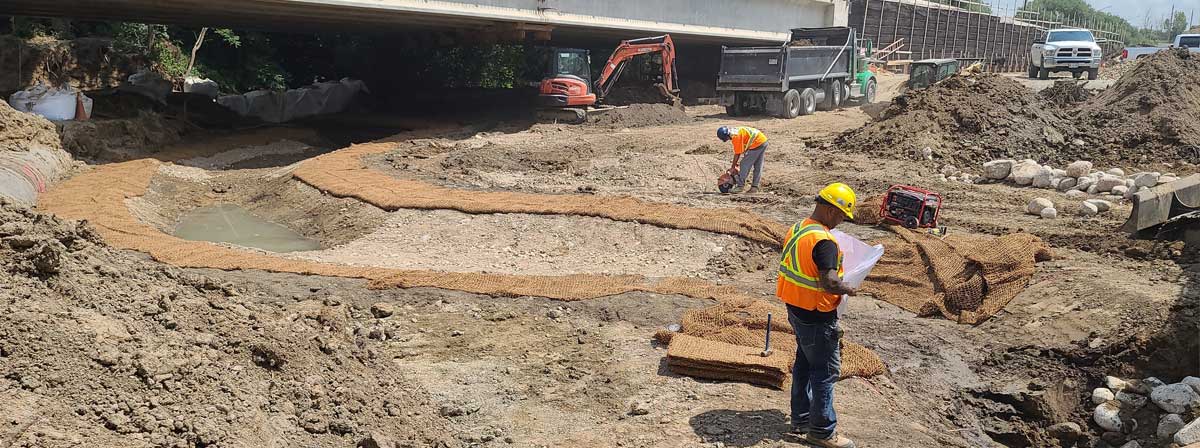
- Implement on-site sediment and erosion controls to protect stormwater quality.
- Reduce noise, dust, and air emissions to safeguard surrounding communities.
- Monitor soil and groundwater during excavation and remediation phases.
Prominent projects across Toronto — from major transit developments to brownfield revitalizations — are now incorporating closed-loop construction practices that emphasize resource recovery, low-carbon materials, and long-term environmental performance.
By integrating EMS into project delivery, Toronto’s construction industry is proving that rapid growth and environmental responsibility can coexist. Each sustainable project not only contributes to the city’s circular economy but also sets a precedent for how urban development across Canada can evolve toward a cleaner, smarter future.
Vancouver: Air Quality and Green Infrastructure Leadership
Vancouver continues to set the national benchmark for clean air and green design. Guided by its Greenest City Action Plan and the Climate Emergency Action Plan, the city has integrated environmental management practices into nearly every municipal department.
Key initiatives include:
- Urban forest expansion to improve air quality and reduce heat island effects.
- Green roofs and permeable pavements that manage stormwater naturally.
- Low-emission transport policies supported by continuous air quality monitoring and reporting.
The city’s environmental management framework ensures that each infrastructure project undergoes comprehensive environmental assessment and post-construction monitoring. Vancouver’s approach exemplifies how EMS tools — when embedded in city planning — can translate sustainability targets into operational outcomes.
Collaboration has also been central to success. By engaging developers, environmental consultants, and local NGOs, Vancouver maintains transparency and alignment across all sustainability goals.
Montreal: Sustainable Urban Planning Through Environmental Stewardship
Montreal’s commitment to sustainable urban development is deeply rooted in its planning philosophy. The city’s Climate Plan 2020–2030 and Zero Waste Strategy emphasize both mitigation and adaptation, with environmental management systems serving as a key implementation mechanism.
Montreal’s initiatives include:
- Biodiversity corridors that reconnect urban ecosystems.
- Comprehensive waste diversion programs focused on reducing landfill dependency.
- Low-carbon zoning policies integrated into development approvals.
A major achievement has been the expansion of green spaces and urban parks, supported by environmental assessments and soil remediation practices to rehabilitate formerly industrial lands.
The city’s integrated EMS ensures each department — from waste management to urban design — operates with shared environmental objectives and measurable sustainability indicators.
The Role of Environmental Management Services in Urban Transformation
As cities modernize, managing environmental performance requires not just policy — but expertise. Environmental Management Services (EMS providers) like Groundwater Environmental Management Services (GEMS) offer municipalities and developers the technical and strategic support needed to deliver results.
Key areas where environmental services are driving impact include:
- Waste Audits and Resource Recovery Planning: Helping cities and construction projects identify diversion opportunities and optimise recycling systems.
- Air Quality Assessments and Mitigation Plans: Using real-time monitoring and modelling to improve public health outcomes.
- Stormwater and Groundwater Management: Designing resilient systems to reduce flooding and contamination risks.
- Environmental Compliance and Reporting: Ensuring municipal projects meet regulatory and ESG reporting standards.
- Sustainable Infrastructure Consulting: Embedding environmental performance into the early stages of planning and design.
These services not only ensure compliance but also enhance efficiency, reduce costs, and build public trust — critical components of any smart city strategy.
Green Infrastructure: The Backbone of the Clean City
One of the most visible transformations in urban environmental management is the rise of green infrastructure — the integration of natural systems into city planning.
Canadian cities are investing in:
- Rain gardens and bioswales to filter runoff and manage stormwater.
- Urban forests to sequester carbon and improve air quality.
- Green roofs and walls that insulate buildings and support biodiversity.
These initiatives, guided by EMS frameworks, provide long-term environmental, economic, and social returns. For example, stormwater capture systems in Toronto’s new developments are reducing both municipal costs and pollution levels in Lake Ontario.
By measuring the environmental performance of these projects through EMS metrics, municipalities can track their progress toward net-zero goals — and adjust strategies based on real-world data.
Collaboration for Cleaner, Smarter Cities
The transformation toward smart, sustainable cities is not achieved by governments alone. It depends on collaboration across public and private sectors — and the expertise of environmental professionals who can navigate complex regulatory, technical, and community landscapes.
Environmental Management Services serve as the connective tissue between policy and implementation, turning climate strategies and sustainability commitments into measurable action. When properly integrated into urban systems, EMS frameworks provide a roadmap for continuous improvement — ensuring that smart cities remain adaptable, resilient, and equitable.
Partnering for a Cleaner Future
Canada’s cities are the engines of its economy and the stage for its sustainability success. Building a clean urban future means rethinking how we manage construction, waste, air, and land — and aligning technology, policy, and expertise toward shared environmental goals.
Groundwater Environmental Management Services (GEMS) is proud to support that mission. With deep experience in environmental assessments, sustainable construction consulting, air quality management, and green infrastructure planning, GEMS partners with municipalities, developers, and planners to deliver smarter, cleaner, and more resilient cities.
Contact GEMS today to learn how our Environmental Management Services can help your city or project advance sustainability goals, strengthen compliance, and set new standards for urban environmental excellence.