



16 Jul Groundwater Management
Groundwater is one of the most important environmental considerations in land development and construction. While it is often hidden beneath the surface, groundwater can significantly influence excavation activities, site design, project costs, environmental compliance, and construction schedules.
Many developers focus on visible site conditions during the planning process, yet subsurface water conditions can create challenges that are far more difficult and expensive to address once construction begins. Understanding groundwater conditions early allows project teams to identify potential risks, meet regulatory requirements, and make informed decisions throughout the development process.
Effective groundwater management is not simply an environmental obligation. It is a critical component of successful project planning.
Understanding Groundwater and Its Impact
Groundwater exists beneath the earth’s surface within soil, sand, gravel, and rock formations. It can move through these materials and interact with nearby streams, wetlands, stormwater systems, and municipal infrastructure.
During construction, groundwater can influence excavation stability, foundation design, utility installation, and site servicing activities. High groundwater levels may increase construction complexity and require additional management measures.
Without a clear understanding of groundwater conditions, developers may encounter unexpected challenges that affect both project schedules and budgets.
Early investigation helps project teams understand how groundwater may impact construction activities before work begins.
Why Groundwater Investigations Matter
A comprehensive groundwater investigation provides valuable information about site conditions. Environmental professionals can assess groundwater levels, seasonal fluctuations, flow patterns, and site-specific hydrogeological characteristics.
This information supports more accurate planning and design decisions.
For example, groundwater investigations may identify areas where excavation depths could intersect the water table. They may also reveal conditions that require temporary dewatering systems or additional environmental monitoring.
By identifying potential concerns early, developers can avoid costly surprises during construction.
Reducing Construction Risks
Unexpected groundwater conditions can create significant risks for construction projects.
Excess groundwater may affect excavation stability, increase safety concerns, delay utility installations, and complicate foundation construction. In some cases, uncontrolled groundwater can contribute to soil movement or affect nearby infrastructure.
A proactive groundwater management strategy helps reduce these risks by identifying potential challenges before they become costly problems.
Developers who invest in early groundwater assessments are often better prepared to manage site conditions efficiently and safely.
Supporting Regulatory Compliance
Construction projects throughout Ontario are subject to a variety of environmental regulations and approval requirements. Groundwater considerations often play an important role in these processes.
Regulatory agencies may require groundwater assessments, monitoring programmes, discharge permits, environmental reports, or mitigation plans depending on the nature of the project and site conditions.
Proper environmental compliance planning helps developers understand their obligations before construction begins.
Projects that proactively address groundwater concerns are often able to navigate approval processes more efficiently while reducing the risk of compliance-related delays.
Managing Dewatering Activities
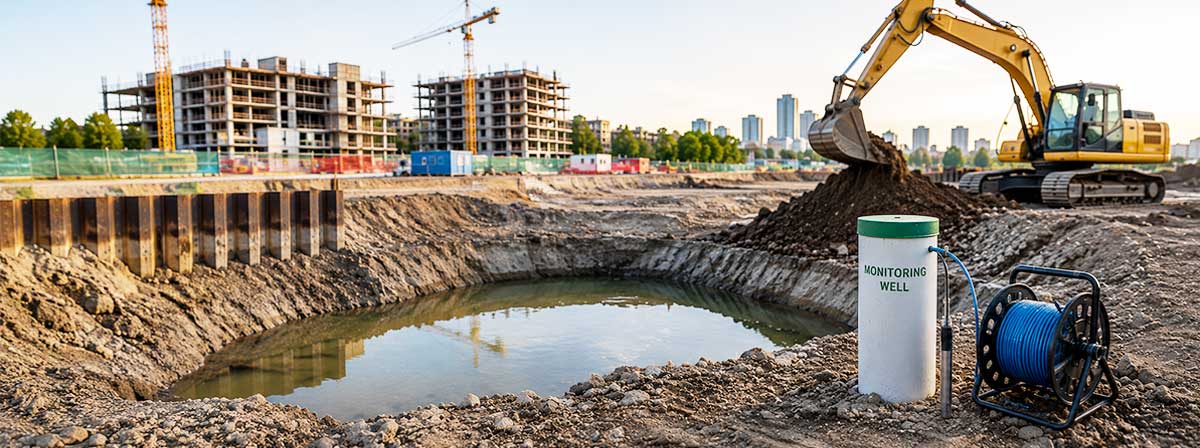
Many construction projects require temporary dewatering to facilitate excavation and underground construction activities. Dewatering involves removing groundwater from excavations to maintain safe and workable conditions.
While common on many sites, dewatering activities must be carefully planned and managed.
Discharged water may require monitoring, treatment, or approval before being released into municipal systems or natural watercourses. Improper management can result in environmental impacts, regulatory concerns, and project delays.
Understanding groundwater conditions before construction allows project teams to develop effective dewatering strategies that support both operational and environmental objectives.
Protecting Nearby Properties and Natural Features
Groundwater does not recognise property boundaries. Activities occurring on one site can sometimes affect neighbouring properties, natural features, and infrastructure.
Changes in groundwater levels may influence nearby wetlands, watercourses, foundations, utilities, or private water supplies. As a result, groundwater management often extends beyond the limits of a development site.
Environmental professionals evaluate these potential interactions to help minimise adverse impacts and support responsible development practices.
Protecting surrounding environmental and community assets helps reduce risk while maintaining positive relationships with stakeholders.
Improving Project Planning and Budgeting
Groundwater-related challenges can affect construction costs if they are discovered after work begins.
Additional excavation support, dewatering systems, environmental monitoring, and schedule adjustments can all increase project expenses when groundwater issues arise unexpectedly.
By incorporating groundwater assessments into the early planning process, developers gain valuable information that supports more accurate budgeting and scheduling.
This proactive approach allows project teams to make informed decisions while reducing uncertainty throughout the development lifecycle.
Groundwater Management Is an Investment in Project Success
Successful development projects rely on thorough planning and risk management. Groundwater conditions are a critical part of that equation.
Early groundwater investigations, environmental assessments, and monitoring programmes provide valuable insights that help developers avoid delays, reduce costs, and maintain compliance throughout construction.
As environmental regulations continue to evolve, effective groundwater management is becoming increasingly important for projects of every size.
Partnering With Environmental Experts
Navigating groundwater challenges requires specialised knowledge and practical experience. From groundwater investigations and dewatering support to environmental monitoring and regulatory compliance assistance, professional guidance can help developers move forward with confidence.
Groundwater Environmental Management Services (GEMS) works with developers, contractors, engineers, and landowners across Ontario to provide practical environmental solutions that support successful project outcomes.
To learn how GEMS can help manage groundwater risks on your next development or construction project, contact the team today and discover the value of proactive environmental planning.