






06 Jul Common Erosion Control Failures Found on Construction Sites
Erosion and sediment control play a critical role in protecting water resources during construction activities. As land is cleared, graded, and excavated, exposed soil becomes vulnerable to erosion from wind, rain, and surface runoff. Without effective controls, sediment can leave a site and enter nearby stormwater systems, streams, wetlands, and environmentally sensitive areas.
Environmental regulations across Ontario require construction projects to implement and maintain appropriate erosion and sediment control measures. However, even when controls are installed, failures can occur if they are not properly designed, maintained, or monitored.
Understanding the most common erosion control failures can help developers, contractors, and project managers reduce environmental risks and avoid costly project disruptions.
Improperly Installed Silt Fencing
Silt fencing remains one of the most widely used erosion and sediment control measures on construction sites. When installed correctly, it helps capture sediment before runoff leaves the site.
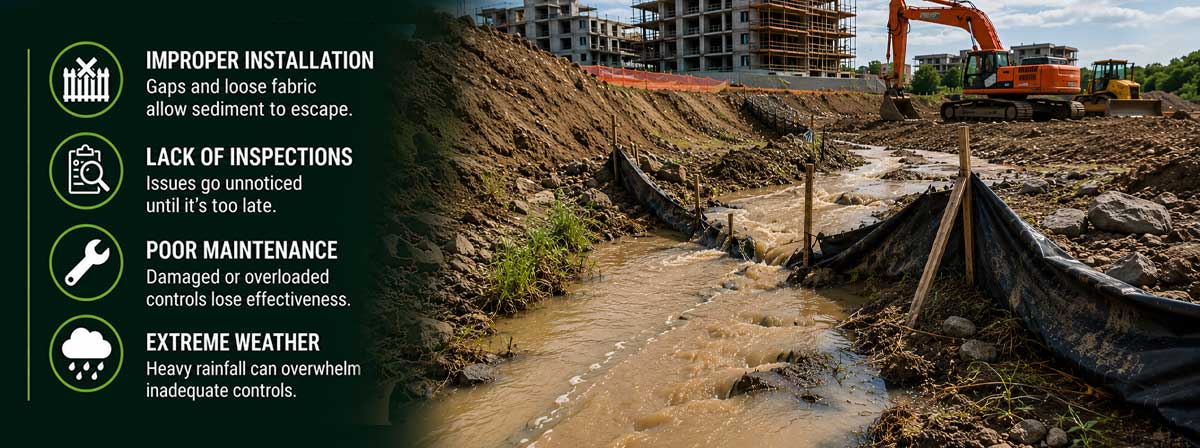
Unfortunately, improper installation is one of the most common causes of failure. In many cases, fencing is not trenched into the ground, allowing water and sediment to flow underneath. Other installations may contain gaps, loose fabric, or inadequate support posts.
Even a well-designed erosion control plan can become ineffective if control measures are not installed according to specifications.
Lack of Regular Inspections
Construction sites are constantly changing environments. Weather conditions, equipment movement, and ongoing earthworks can all affect erosion control measures.
One of the most frequent compliance issues occurs when controls are installed at the beginning of a project and then largely forgotten.
Regular environmental inspections are essential for identifying damaged controls, sediment accumulation, or emerging risks. Without routine inspections, small problems can quickly become significant environmental concerns.
Proactive monitoring helps ensure that control measures continue to perform as intended throughout construction.
Failure to Maintain Control Measures
Even properly installed controls require ongoing maintenance. Sediment traps fill over time, silt fencing can become damaged, and erosion blankets may shift during heavy rainfall events.
A common mistake is assuming that erosion control measures are permanent once installed. In reality, many controls require regular cleaning, repair, and replacement.
Failure to maintain these systems can reduce their effectiveness and increase the likelihood of sediment releases during storm events.
Routine maintenance should be integrated into every project’s environmental management programme.
Inadequate Controls for Changing Site Conditions
Construction projects rarely remain static. As grading progresses and site layouts change, erosion risks often change as well.
Controls that were appropriate during the early stages of construction may no longer provide sufficient protection later in the project.
For example, newly exposed slopes may require additional stabilisation measures, while expanded drainage pathways may require enhanced sediment control structures.
Environmental protection plans should evolve alongside construction activities to address changing site conditions.
Poor Stabilisation of Exposed Soil
Exposed soil is one of the primary sources of sediment on construction sites. Areas left unprotected for extended periods are particularly vulnerable to erosion during rainfall events.
Temporary or permanent soil stabilisation measures can significantly reduce erosion risks. These measures may include hydroseeding, erosion control blankets, mulch application, vegetation establishment, or other surface protection techniques.
When stabilisation efforts are delayed, sediment losses can increase rapidly, particularly during periods of intense rainfall.
Insufficient Stormwater Management
Erosion and sediment control measures are most effective when combined with appropriate stormwater management practices.
Construction activities often alter natural drainage patterns, increasing runoff volumes and flow velocities. If stormwater is not properly managed, even well-maintained erosion controls can become overwhelmed.
Temporary drainage systems, sediment basins, diversion channels, and controlled discharge points can help manage runoff while reducing erosion risks.
Considering stormwater management as part of an integrated environmental strategy often leads to better project outcomes.
Underestimating Extreme Weather Events
Weather conditions continue to present significant challenges for construction projects across Ontario. Intense rainfall events can generate large volumes of runoff within a short period, placing considerable stress on erosion control systems.
Projects that fail to prepare for severe weather are more likely to experience sediment releases, damaged controls, and regulatory concerns.
Environmental management plans should include contingency measures for heavy rainfall and other extreme weather conditions. Additional inspections before and after major storms can also help identify issues before they escalate.
Training and Awareness Remain Critical
Effective erosion control depends on more than physical infrastructure. Site personnel play an important role in protecting environmental controls throughout the construction process.
Equipment operators, supervisors, and subcontractors should understand the purpose of erosion control measures and recognise activities that could compromise their effectiveness.
Regular communication and environmental awareness training can help reduce accidental damage and improve overall site performance.
When environmental responsibilities are clearly understood, projects are better equipped to maintain compliance.
Protecting Projects Through Proactive Erosion Control
Erosion control failures can lead to regulatory investigations, project delays, environmental impacts, and increased costs. Fortunately, most failures are preventable through proper planning, installation, monitoring, and maintenance.
A proactive approach to erosion and sediment control, environmental monitoring, and stormwater management helps reduce risk while supporting regulatory compliance and responsible construction practices.
Contact GEMS
Groundwater Environmental Management Services (GEMS) provides practical environmental solutions for developers, contractors, engineers, and landowners across Ontario. From erosion and sediment control inspections and environmental monitoring to groundwater management and compliance support, GEMS helps clients navigate environmental requirements with confidence.
To learn how GEMS can support your next construction or development project, contact the team today and discover how proactive environmental management can help keep your project on track.