



06 Aug Preparing for Environmental Inspections
Environmental inspections are a routine part of many construction and land development projects. Whether conducted by municipal officials, conservation authorities, environmental agencies, or project stakeholders, inspections help verify that environmental protection measures are functioning as intended and that regulatory requirements are being met.
For contractors, inspections should not be viewed as unexpected disruptions. Instead, they provide an opportunity to demonstrate compliance, identify potential issues early, and support responsible site management.
A proactive approach to environmental compliance can help projects avoid delays, reduce risk, and maintain positive relationships with regulators and clients.
Understand Project-Specific Environmental Requirements
Every construction project has unique environmental obligations. Before an inspection occurs, contractors should understand the specific requirements that apply to their site.
These may include erosion and sediment control measures, groundwater monitoring programmes, stormwater management requirements, dewatering activities, permit conditions, and environmental protection plans.
Project managers and site supervisors should ensure that environmental responsibilities are clearly communicated to all personnel working on-site.
A thorough understanding of project requirements provides the foundation for successful inspections.
Inspect Erosion and Sediment Control Measures
One of the first areas inspectors often review is the condition of erosion and sediment control systems.
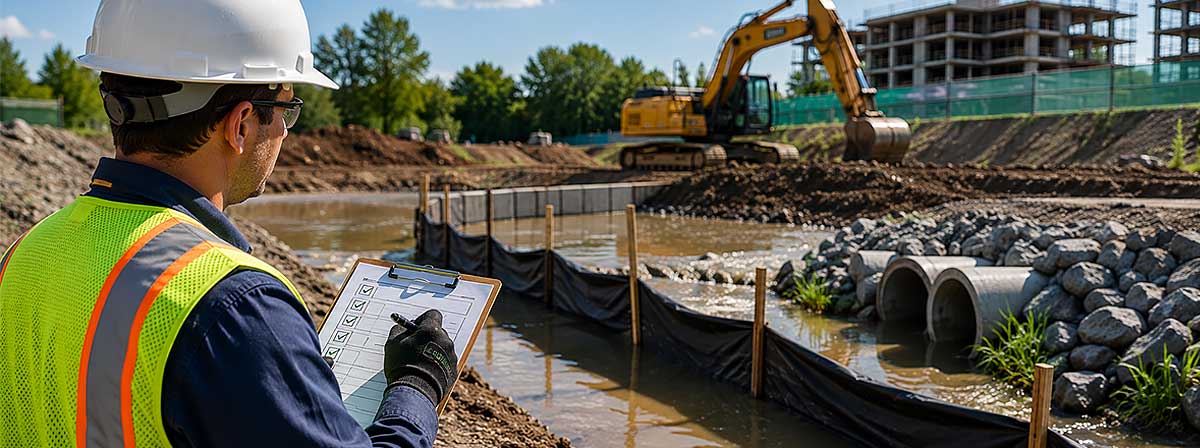
Silt fencing, sediment traps, check dams, erosion blankets, stabilised construction entrances, and other environmental controls should be inspected regularly. Damaged or improperly maintained controls can quickly become compliance concerns.
Before an inspection, contractors should verify that all control measures are functioning correctly and that accumulated sediment has been removed where necessary.
Well-maintained controls demonstrate a commitment to environmental stewardship and regulatory compliance.
Review Site Housekeeping Practices
Good housekeeping is an important indicator of overall site management.
Inspectors may evaluate how materials are stored, whether waste is properly managed, and whether potential contaminants are adequately contained.
Construction debris, fuel containers, chemicals, and equipment should be organised and stored according to project requirements and environmental best practices.
A clean and orderly site not only supports compliance but also contributes to improved safety and operational efficiency.
Verify Groundwater and Dewatering Operations
Projects involving excavation activities often require groundwater management or temporary dewatering systems.
Inspectors may review discharge locations, monitoring records, treatment systems, and permit documentation associated with dewatering activities.
Contractors should ensure that discharge points remain operational and that monitoring equipment is functioning correctly. Any required water quality records should be readily available for review.
Proper management of groundwater and dewatering activities helps minimise environmental impacts while supporting regulatory obligations.
Confirm Stormwater Management Controls Are Functioning
Rainfall and runoff can create environmental challenges throughout the construction process. As a result, inspectors frequently evaluate temporary and permanent stormwater management measures.
Contractors should verify that drainage pathways remain unobstructed and that runoff is being directed as intended. Temporary basins, swales, and sediment control structures should be inspected for signs of damage or reduced performance.
Addressing deficiencies before an inspection can help prevent unnecessary compliance issues.
Maintain Accurate Environmental Documentation
Environmental compliance extends beyond physical site conditions. Documentation is often just as important as the environmental controls themselves.
Inspection reports, monitoring records, maintenance logs, permit documentation, corrective action records, and training records should be organised and easily accessible.
Missing documentation can raise concerns even when environmental protection measures are functioning properly.
Accurate record keeping demonstrates due diligence and provides evidence that environmental obligations are being fulfilled consistently throughout the project.
Ensure Staff Understand Environmental Responsibilities
Environmental compliance is a team effort. Site personnel should understand their roles and responsibilities before an inspection takes place.
Supervisors, equipment operators, subcontractors, and environmental staff should be familiar with site-specific requirements and know how to respond to questions regarding environmental controls.
Short environmental briefings can help reinforce expectations and improve site-wide awareness.
When personnel understand environmental objectives, projects are better positioned to maintain compliance and respond effectively during inspections.
Address Potential Issues Before They Escalate
One of the most effective ways to prepare for inspections is to conduct routine internal reviews.
Regular environmental inspections performed by project teams can identify problems before regulators or external stakeholders discover them. These reviews provide opportunities to correct deficiencies, improve site performance, and strengthen compliance programmes.
Proactive environmental management often reduces the likelihood of enforcement actions and project delays.
Building a Culture of Environmental Compliance
Successful inspections are rarely the result of last-minute preparation. They reflect a consistent commitment to environmental protection throughout the construction process.
Projects that prioritise environmental monitoring, erosion and sediment control, groundwater management, and proper documentation are generally better prepared for regulatory reviews and changing site conditions.
By integrating environmental responsibilities into daily operations, contractors can reduce risk while supporting efficient project delivery.
Partnering With Environmental Professionals
Environmental regulations continue to evolve, and compliance requirements can vary significantly between projects. Professional guidance can help contractors navigate these complexities while maintaining project momentum.
Groundwater Environmental Management Services (GEMS) works with contractors, developers, engineers, and landowners across Ontario to provide practical environmental solutions. From environmental inspections and compliance monitoring to groundwater management and erosion and sediment control support, GEMS helps clients meet regulatory requirements with confidence.
To learn how GEMS can support your next project and help prepare your team for environmental inspections, contact the team today and discover the benefits of proactive environmental management.