






16 Aug Preparing Construction Sites for Extreme Rainfall Events
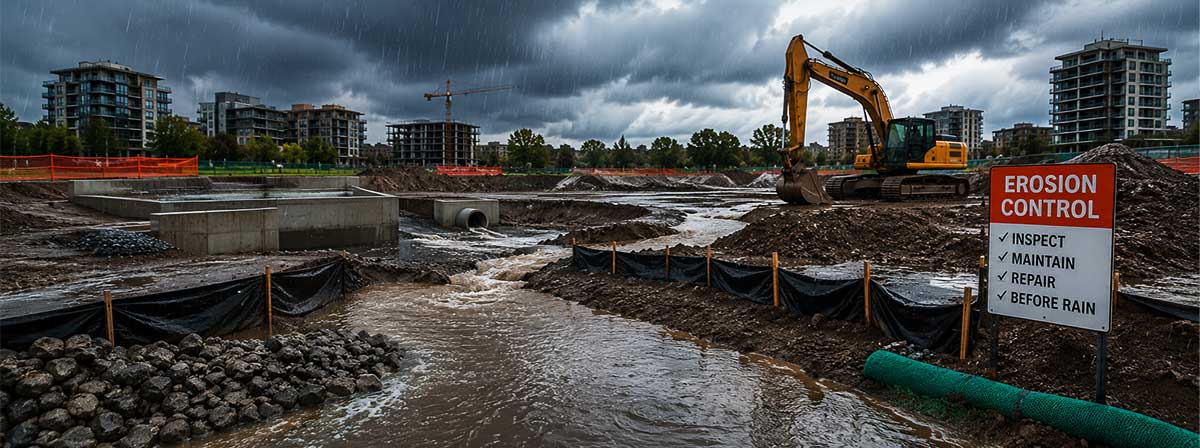
Extreme rainfall events are becoming more common across Ontario, creating new challenges for construction and land development projects. Heavy rain can overwhelm drainage systems, damage erosion controls, flood excavations, transport sediment, and create significant environmental and safety risks.
For developers, contractors, and project managers, preparing for severe weather is no longer optional. A proactive approach can help protect workers, reduce environmental impacts, maintain regulatory compliance, and minimise costly project delays.
Effective planning before a storm arrives can make a significant difference in how a construction site performs during extreme weather conditions.
Understanding Site-Specific Risks
Every construction site has unique vulnerabilities. Factors such as topography, soil conditions, groundwater levels, nearby watercourses, and the stage of construction can all influence how a site responds to heavy rainfall.
Low-lying areas may be susceptible to flooding, while steep slopes can experience erosion or slope instability. Sites with extensive exposed soil are particularly vulnerable to sediment transport during intense rain events.
Conducting a thorough site risk assessment helps identify areas that require additional protection before severe weather occurs.
Strengthening Erosion and Sediment Controls
One of the most effective ways to prepare for heavy rainfall is to inspect and reinforce existing erosion and sediment control measures.
Silt fencing, sediment traps, check dams, erosion blankets, and sediment basins should be reviewed regularly to ensure they remain functional and properly installed. Any damaged controls should be repaired immediately.
Accumulated sediment should also be removed from containment structures to maintain their effectiveness.
Strong erosion controls help prevent sediment from leaving the site and entering nearby stormwater systems, wetlands, and watercourses.
Managing Stormwater Before It Becomes a Problem
Heavy rainfall can generate large volumes of runoff in a short period of time. Without proper management, this runoff can overwhelm environmental controls and create flooding concerns.
Construction teams should ensure that temporary drainage systems remain clear of debris and sediment. Swales, ditches, catch basins, and culverts should be inspected before major weather events.
Additional stormwater management measures may be required in areas that are particularly vulnerable to flooding or runoff accumulation.
Proper water management helps direct runoff safely through the site while reducing erosion risks.
Stabilising Exposed Soil
Exposed soil is highly vulnerable during heavy rainfall events. Without adequate protection, runoff can carry large amounts of sediment across the site and into surrounding areas.
Temporary stabilisation measures can significantly reduce erosion risks. Depending on site conditions, these measures may include hydroseeding, mulch application, erosion control blankets, geotextiles, or temporary vegetation.
Areas that will remain inactive for extended periods should receive priority attention.
Protecting exposed soil before severe weather arrives can prevent environmental damage and reduce future remediation costs.
Protecting Excavations and Underground Works
Excavations often present some of the greatest challenges during periods of intense rainfall.
Water accumulation within excavations can create unsafe working conditions, delay construction activities, and increase the risk of slope instability. Groundwater conditions can further complicate these situations.
Project teams should review dewatering systems, pumps, discharge locations, and contingency plans before significant rainfall is expected.
Effective groundwater management and excavation protection strategies help maintain site safety and minimise disruptions.
Securing Equipment and Materials
Heavy rainfall can affect more than just soil and drainage systems. Construction materials, equipment, fuels, and chemicals may also be vulnerable during severe weather events.
Loose materials should be secured or relocated to protected areas. Fuel storage, chemical containers, and hazardous materials should be stored in accordance with environmental requirements and positioned away from drainage pathways whenever possible.
Taking these precautions helps reduce the risk of spills, contamination, and property damage during storms.
Developing an Emergency Response Plan
Preparation is most effective when supported by a clear and well-communicated response plan.
An emergency weather response plan should identify key responsibilities, communication procedures, emergency contacts, and actions required before, during, and after extreme rainfall events.
Site personnel should understand evacuation procedures, reporting requirements, and contingency measures for critical infrastructure and environmental controls.
Training and preparation help ensure that teams can respond quickly when weather conditions change unexpectedly.
Monitoring Weather Conditions and Site Performance
Weather forecasting tools have become increasingly sophisticated and provide valuable information for construction planning.
Project teams should monitor weather forecasts closely, particularly during periods when significant rainfall is expected. Early warnings allow crews to implement protective measures before conditions deteriorate.
Following major rainfall events, sites should be inspected for erosion, sediment releases, drainage issues, damaged controls, and other environmental concerns.
Prompt corrective action helps maintain compliance and prevents small issues from becoming larger problems.
Building Resilience Through Proactive Planning
Extreme rainfall events will continue to challenge construction projects across Ontario. As weather patterns evolve, developers and contractors must adapt their environmental management strategies to address increasing risks.
Projects that prioritise erosion and sediment control, stormwater management, groundwater protection, and emergency preparedness are better equipped to withstand severe weather while protecting both the environment and project schedules.
Proactive planning not only reduces risk but also demonstrates a commitment to responsible construction practices.
Partnering With Environmental Professionals
Preparing for extreme rainfall requires experience, planning, and ongoing environmental oversight. Professional support can help project teams identify vulnerabilities, strengthen site controls, and maintain compliance during challenging weather conditions.
Groundwater Environmental Management Services (GEMS) provides environmental monitoring, groundwater management, erosion and sediment control inspections, and regulatory compliance support for construction and development projects throughout Ontario.
To learn how GEMS can help prepare your site for extreme rainfall events and changing environmental conditions, contact the team today and discover the value of proactive environmental management.